
Diabetic Foot Check in Glasgow
If you live with diabetes, regular foot checks help identify changes in skin, circulation, sensation and pressure before they become bigger problems.
Ask about care at Dennistoun
568 Alexandra Parade, Dennistoun, Glasgow G31 3BP. Our Dennistoun clinic has step-free access. Call reception if you need help planning your visit.
Read about clinical podiatry care
Call to choose the right appointment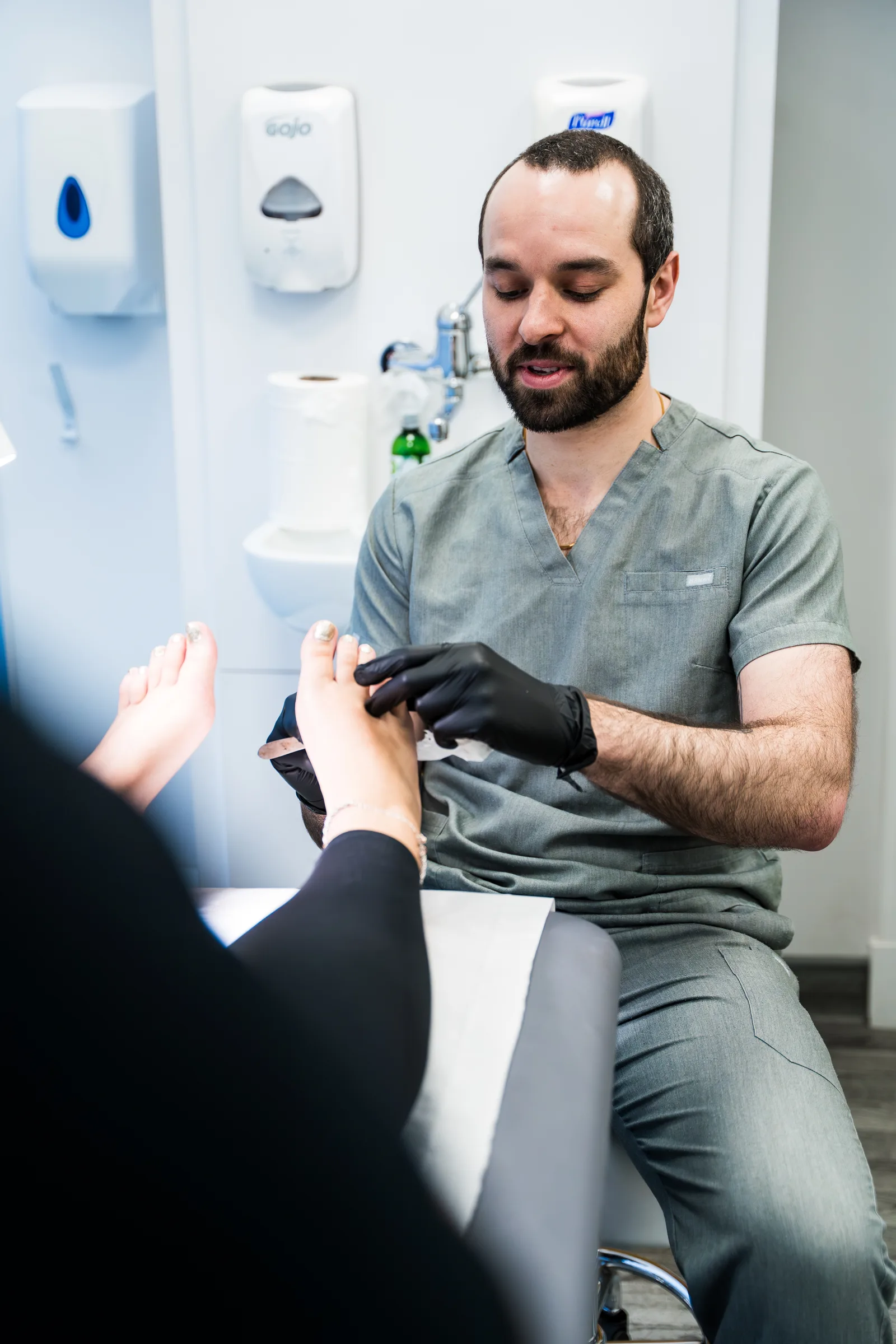
Which appointment should I book?
Tell reception about your symptoms and relevant medical conditions so we can help you choose the appropriate first appointment. Do not book a cosmetic or routine nail service simply because the problem is in your foot. If you need urgent medical help, do not wait for a routine clinic booking.
- 568 Alexandra Parade, Dennistoun, Glasgow G31 3BP
- Call 0141 363 0306 so reception can help you choose the appropriate appointment and clinic.
- For help choosing, call reception on 0141 363 0306.
You deserve a clear answer, not more guessing.
At The Hub Glasgow, podiatry, physiotherapy, diagnostics and rehabilitation sit together. That means we can look at the problem properly and guide you to the right next step.
From everyday foot care to more complex pain.
The Hub Glasgow brings podiatry, MSK assessment, in-house diagnostic ultrasound, gait thinking and rehabilitation together. That is useful when symptoms are painful, recurring, unclear or stopping you from walking, running, training or working comfortably.
What it can feel like
Some people have no symptoms at all. Others may notice numbness, tingling, dry skin, pressure areas, callus, nail problems or slower healing.
Common causes
- Reduced sensation in the feet
- Circulation changes
- Pressure from footwear or callus
- Skin dryness or cracking
- Nail and skin problems that need podiatry care
How we assess it
A diabetic foot check may include skin and nail review, pulse checks, sensation testing, footwear advice and risk guidance based on current findings.
Treatment options
- Routine podiatry care
- Skin and nail management
- Footwear and pressure advice
- Education on daily foot checks
- Referral guidance where risk is higher
Questions people often ask
How often should I have a diabetic foot check?
Frequency depends on your risk level and any current foot problems. If you are unsure, a podiatry assessment can help decide what is sensible.
Should I ignore numbness if there is no pain?
No. Reduced sensation can mean you miss pressure, rubbing or injury. It is worth getting checked.
Where would my appointment take place?
568 Alexandra Parade, Dennistoun, Glasgow G31 3BP. Our Dennistoun clinic has step-free access. Call reception if you need help planning your visit. Call 0141 363 0306 so reception can help you choose the appropriate appointment and clinic.
Which appointment does this guide link to?
Tell reception about your symptoms and relevant medical conditions so we can help you choose the appropriate first appointment. Do not book a cosmetic or routine nail service simply because the problem is in your foot. If you need urgent medical help, do not wait for a routine clinic booking.