
Ankle Pain in Glasgow
Ankle pain can follow a twist, build up during running or appear without an obvious injury. The useful question is not just where it hurts, but what tissue is being irritated and why it is not settling.
Book at our Dennistoun clinic
568 Alexandra Parade, Dennistoun, Glasgow G31 3BP. Our Dennistoun clinic has step-free access. Call reception if you need help planning your visit.
Compare lower-body first appointments
Book a lower-body assessment in Dennistoun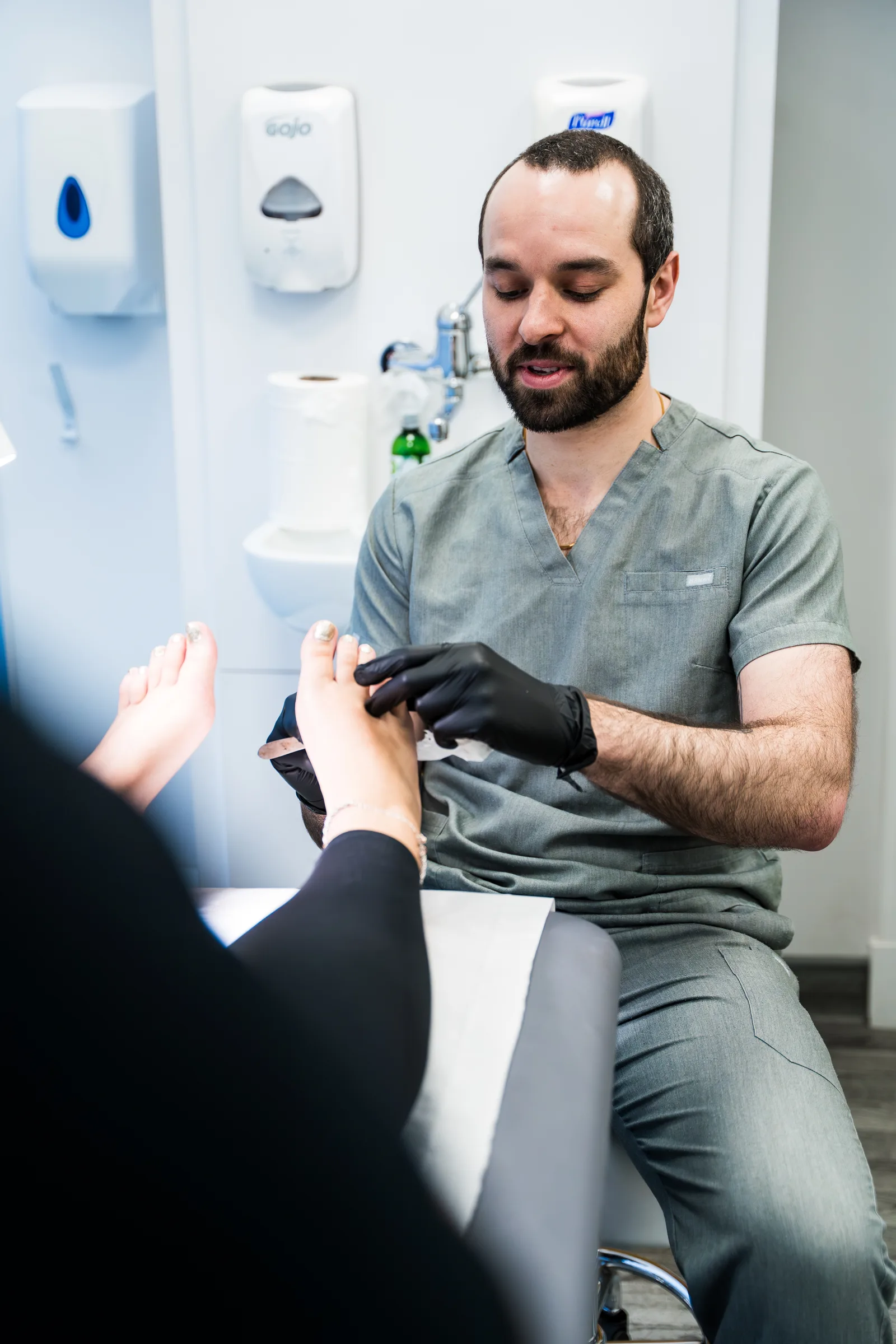
Which appointment should I book?
Choose Lower Body First MSK Appointment with Ollie or Mansi (60 minutes) for foot, ankle, knee or hip pain. This books an assessment, not a course of shockwave, injections or other treatment. Your clinician discusses the next step after assessing you.
- 568 Alexandra Parade, Dennistoun, Glasgow G31 3BP
- This link already selects Dennistoun and the appointment type. Choose a practitioner and time where offered.
- For help choosing, call reception on 0141 363 0306.
You deserve a clear answer, not more guessing.
At The Hub Glasgow, podiatry, physiotherapy, diagnostics and rehabilitation sit together. That means we can look at the problem properly and guide you to the right next step.
From everyday foot care to more complex pain.
The Hub Glasgow brings podiatry, MSK assessment, in-house diagnostic ultrasound, gait thinking and rehabilitation together. That is useful when symptoms are painful, recurring, unclear or stopping you from walking, running, training or working comfortably.
What it can feel like
Ankle pain may feel sharp, aching, stiff, unstable or swollen. It can sit at the front, inside, outside or back of the ankle and may be worse on stairs, uneven ground, running or after rest.
Common causes
- Ankle sprain or ligament irritation
- Tendon overload around the ankle
- Joint stiffness or impingement
- Training load changes
- Foot posture or footwear pressure
How we assess it
Assessment may include checking joint movement, strength, swelling, walking pattern, balance, footwear and whether imaging or diagnostic ultrasound is appropriate.
Treatment options
- Load and activity advice
- Strength and balance rehabilitation
- Footwear and orthotic advice where appropriate
- Manual therapy for stiffness
- Referral for imaging if symptoms suggest it is needed
Questions people often ask
Should I keep walking on ankle pain?
Gentle walking may be fine for some ankle problems, but pain that is worsening, swollen or unstable should be assessed so you are not pushing through the wrong thing.
Can old ankle sprains cause pain years later?
Yes. Reduced strength, balance, mobility or confidence after a sprain can leave the ankle more sensitive or prone to repeat irritation.
Where would my appointment take place?
568 Alexandra Parade, Dennistoun, Glasgow G31 3BP. Our Dennistoun clinic has step-free access. Call reception if you need help planning your visit. This link already selects Dennistoun and the appointment type. Choose a practitioner and time where offered.
Which appointment does this guide link to?
Choose Lower Body First MSK Appointment with Ollie or Mansi (60 minutes) for foot, ankle, knee or hip pain. This books an assessment, not a course of shockwave, injections or other treatment. Your clinician discusses the next step after assessing you.