
Toenail Reconstruction Glasgow
Toenail reconstruction can help improve the appearance and comfort of damaged or unsightly toenails, but it should start with a podiatry check. The important first step is understanding whether the nail is damaged by trauma, pressure, fungal change or another cause.
Book at our Dennistoun clinic
568 Alexandra Parade, Dennistoun, Glasgow G31 3BP. Our Dennistoun clinic has step-free access. Call reception if you need help planning your visit.
Book nail reconstruction in Dennistoun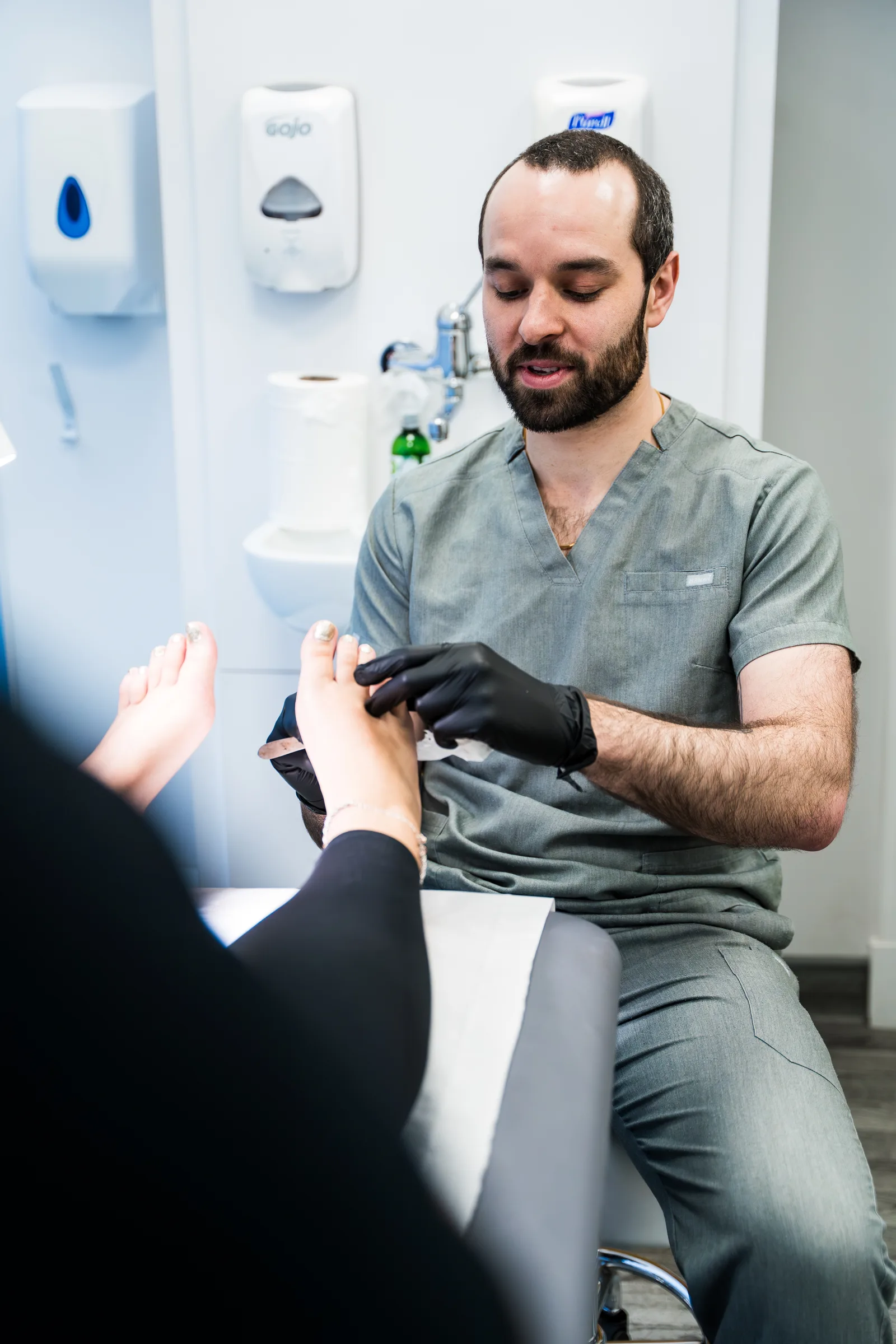
Which appointment should I book?
Choose Nail Reconstruction. Suitability depends on your nail and skin, so treatment is subject to assessment. If you have pain, discharge or an unexplained nail change, call reception before booking this appointment.
- 568 Alexandra Parade, Dennistoun, Glasgow G31 3BP
- This link already selects Dennistoun and the appointment type. Choose a practitioner and time where offered.
- For help choosing, call reception on 0141 363 0306.
Ingrown toenail help
If a nail is painful, inflamed, recurring or difficult to manage, book podiatry rather than waiting for it to settle on its own.
Ingrown toenails are common, painful and often very fixable with the right podiatry plan.

You deserve a clear answer, not more guessing.
At The Hub Glasgow, podiatry, physiotherapy, diagnostics and rehabilitation sit together. That means we can look at the problem properly and guide you to the right next step.
From everyday foot care to more complex pain.
The Hub Glasgow brings podiatry, MSK assessment, in-house diagnostic ultrasound, gait thinking and rehabilitation together. That is useful when symptoms are painful, recurring, unclear or stopping you from walking, running, training or working comfortably.
What it can feel like
People may ask about nail reconstruction for split nails, lifted nails, partially missing nails, thickened nails, damaged big toenails, cosmetic concerns or nails that catch in socks and shoes.
Common causes
- Previous nail trauma
- Repeated footwear pressure
- Fungal nail change
- Damaged or lifted nail plate
- Sport, running or shoe-related nail injury
How we assess it
Assessment checks the nail plate, nail bed, skin, thickness, infection risk and whether reconstruction is suitable or whether the underlying nail problem needs treated first.
Treatment options
- Podiatry nail assessment
- Nail reduction or preparation where appropriate
- Suitability check for reconstruction
- Advice on fungal or damaged nail care
- Review and aftercare guidance
Questions people often ask
Is toenail reconstruction the same as a normal cosmetic nail?
No. In a podiatry setting, suitability depends on nail health, skin condition and why the nail is damaged.
Can reconstruction be done on a fungal nail?
It depends. Fungal involvement needs assessed first so the right treatment order is chosen.
Will it fix the cause of nail damage?
Not by itself. If pressure, trauma or fungal change is driving the problem, that also needs addressed.
Where would my appointment take place?
568 Alexandra Parade, Dennistoun, Glasgow G31 3BP. Our Dennistoun clinic has step-free access. Call reception if you need help planning your visit. This link already selects Dennistoun and the appointment type. Choose a practitioner and time where offered.
Which appointment does this guide link to?
Choose Nail Reconstruction. Suitability depends on your nail and skin, so treatment is subject to assessment. If you have pain, discharge or an unexplained nail change, call reception before booking this appointment.