
Foot Pain in Glasgow
Foot pain is not one diagnosis. Pain under the heel, in the arch, on top of the foot or in the toes can come from very different tissues.
Compare what each first appointment includes before choosing a time.
A foot-pain appointment should start with the right question
Foot pain can come from skin pressure or from structures you cannot see. Those need different first appointments; neither choice assumes you need a scan.
Is the painful thing visible on the skin or nail?
For a corn, callus or nail problem, begin with a new-patient podiatry appointment.
Choose skin-and-nail podiatryDoes the pain feel deeper than the skin?
Use the lower-body first MSK comparison. The £149 team appointment is 60 minutes and does not include ultrasound. Sarah-Jane's £195, 75-minute assessment can include ultrasound only when the area is scannable and imaging would be useful.
Do several areas hurt, or are you unsure?
Tell reception which area limits you most. A first assessment allows time to work through the history; a short review appointment is not a substitute.
Before your visit: Notice where the pain is, when it began, whether it changes with walking or shoes, and what you have already tried. These details help the clinician assess it; they are not a self-diagnosis checklist.
What it can feel like
Foot pain may be sharp, aching, burning, stiff, swollen or pressure-related. It may appear first thing in the morning, during sport, after standing or in certain shoes.
Common causes
- Plantar heel pain
- Tendon irritation
- Joint overload
- Nerve irritation
- Skin, nail or footwear pressure
How we assess it
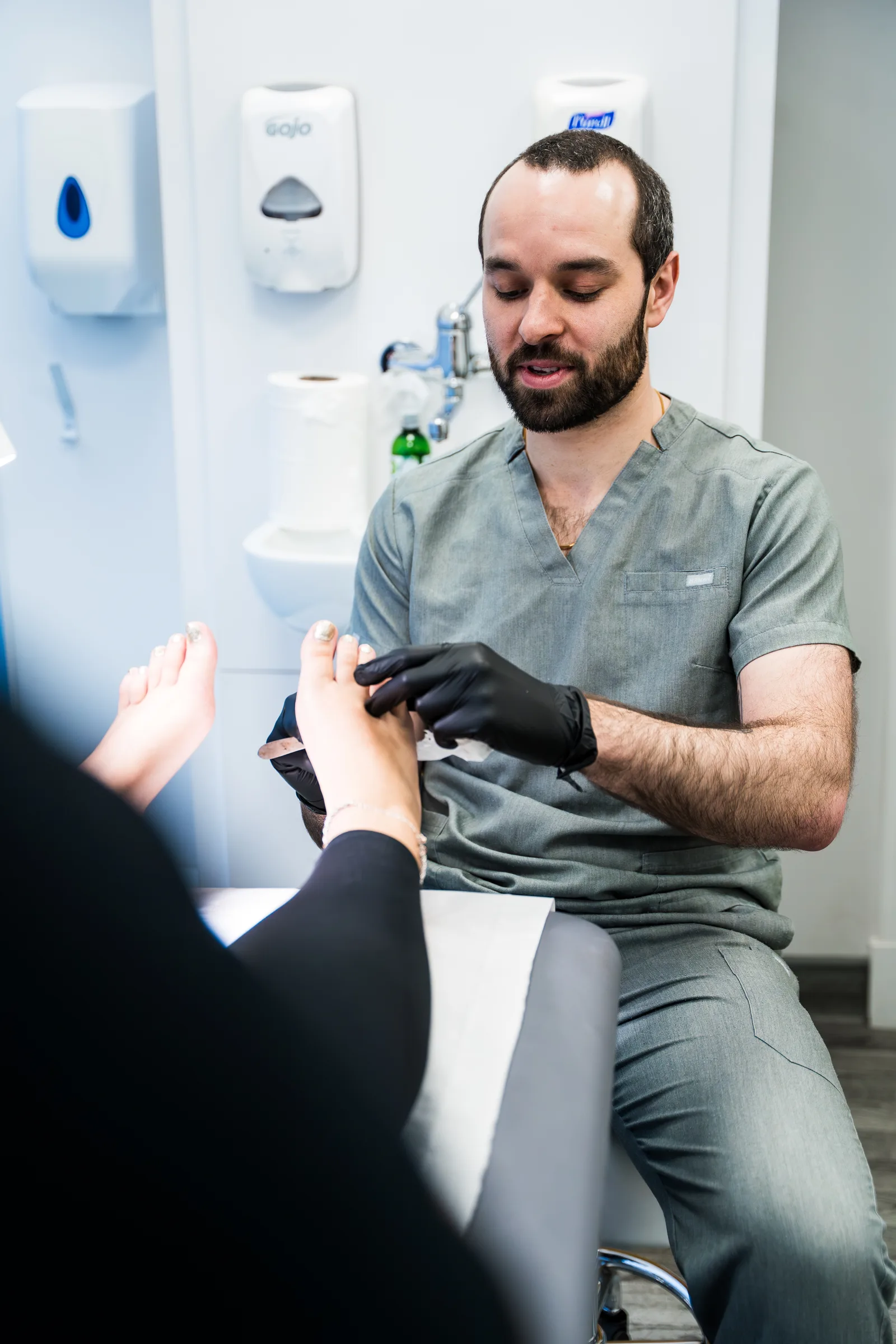
Assessment checks the painful area, movement, strength, skin, footwear, walking pattern and whether diagnostic ultrasound, gait analysis or podiatry treatment is useful.
Treatment options
- Diagnosis-led advice
- Load and activity guidance
- Podiatry care if skin or nails are involved
- Orthotic or footwear advice
- Rehabilitation planning
Questions people often ask
Why is my foot pain not going away?
Persistent foot pain usually means the sensitive tissue is still being loaded or irritated. A clear assessment helps identify why.
Should I rest foot pain?
Sometimes short-term modification helps, but rest alone often does not solve the cause.