
Fungal Nail Treatment in Glasgow
Thick or discoloured toenails are often blamed on fungus, but trauma, footwear pressure, psoriasis and old nail damage can look similar. The first job is not to sell you months of treatment. It is to understand what is actually going on, reduce uncomfortable nail thickness where appropriate and choose a route that makes sense.
Book at our Dennistoun clinic
568 Alexandra Parade, Dennistoun, Glasgow G31 3BP. Our Dennistoun clinic has step-free access. Call reception if you need help planning your visit.
Read about fungal-nail assessment and options
Book a fungal-nail assessment in Dennistoun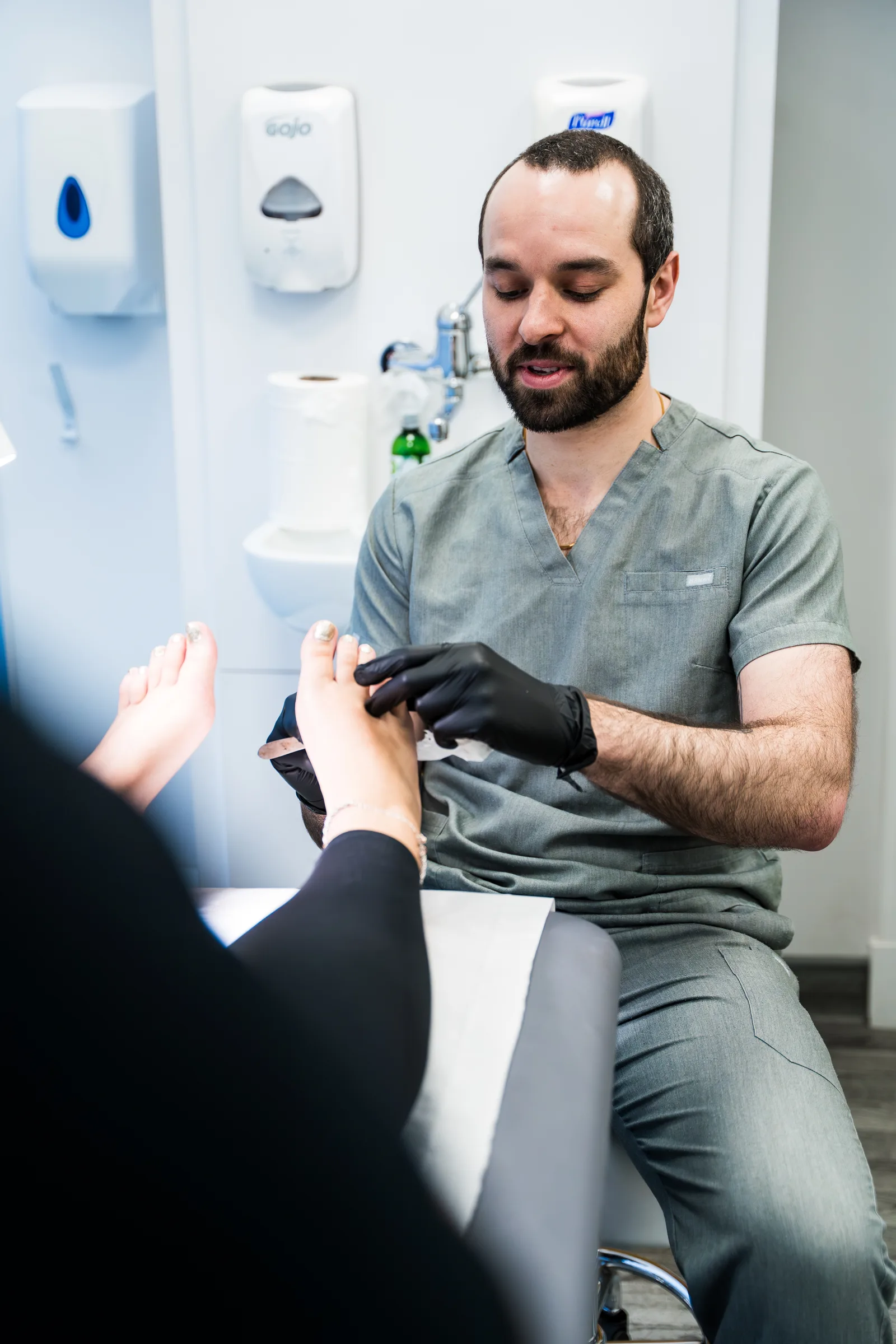
Which appointment should I book?
Choose Fungal Nail Laser – Initial Assessment and Treatment. Your clinician assesses the nail and explains suitable options before proceeding. This appointment name does not mean every changed nail is fungal, laser is appropriate for everyone, or a cure is guaranteed.
- 568 Alexandra Parade, Dennistoun, Glasgow G31 3BP
- This link already selects Dennistoun and the appointment type. Choose a practitioner and time where offered.
- For help choosing, call reception on 0141 363 0306.
You deserve a clear answer, not more guessing.
At The Hub Glasgow, podiatry, physiotherapy, diagnostics and rehabilitation sit together. That means we can look at the problem properly and guide you to the right next step.
From everyday foot care to more complex pain.
The Hub Glasgow brings podiatry, MSK assessment, in-house diagnostic ultrasound, gait thinking and rehabilitation together. That is useful when symptoms are painful, recurring, unclear or stopping you from walking, running, training or working comfortably.
Fungal nail treatment is slow, specific and easy to get wrong.
Current patient guidance is consistent on one practical point: a changed toenail should not be treated on appearance alone if the diagnosis is uncertain. Trauma, shoe pressure, psoriasis and ageing nail changes can mimic fungal infection.
Based on patient-facing guidance from NHS, DermNet and the British Association of Dermatologists.
Download the fungal nail treatment guide.
A practical PDF guide from The Hub Glasgow covering what fungal nails can look like, why diagnosis matters, treatment routes, realistic timelines and what to do if the nail is thick, crumbly or changing colour.
What it can feel like
Fungal nail concerns can include yellow, white or brown nail changes, thickening, crumbling, lifting, odour, pressure in shoes, difficulty cutting the nail, athlete's foot between the toes or embarrassment in sandals and sport.
Common causes
- Fungal nail infection
- Athlete's foot spreading to the nail
- Repeated shoe trauma or sports pressure
- Previous nail injury
- Psoriasis or non-fungal thickened nail change
How we assess it
Assessment reviews the nail appearance, thickness, nail-bed attachment, surrounding skin, skin between the toes, footwear pressure, previous treatments and whether testing, podiatry reduction, topical treatment guidance or GP/prescriber discussion is the right next step.
Treatment options
- Fungal nail assessment
- Reduction of thick nail where appropriate
- Skin and athlete's foot advice
- Topical treatment guidance where suitable
- GP/prescriber discussion if oral medication may be needed
- Review plan for slow-growing nails
Questions people often ask
Are all thick yellow nails fungal?
No. Trauma, footwear pressure, psoriasis and nail damage can mimic fungal nail infection. Assessment helps avoid wasting months on the wrong treatment.
How long does fungal nail treatment take?
Toenails grow slowly, so visible improvement usually takes months. The right plan depends on severity, nail thickness, skin involvement and whether the nail is still attached normally.
Do I need tablets for fungal nails?
Not always. Oral antifungal medication can be useful for some confirmed infections, but it needs medical suitability checks and is usually arranged through a GP or prescriber.
Can fungal nail come from athlete's foot?
Yes. Fungal skin infection can spread between the skin and nails, so the skin between the toes and the nail often need considered together.
Where would my appointment take place?
568 Alexandra Parade, Dennistoun, Glasgow G31 3BP. Our Dennistoun clinic has step-free access. Call reception if you need help planning your visit. This link already selects Dennistoun and the appointment type. Choose a practitioner and time where offered.
Which appointment does this guide link to?
Choose Fungal Nail Laser – Initial Assessment and Treatment. Your clinician assesses the nail and explains suitable options before proceeding. This appointment name does not mean every changed nail is fungal, laser is appropriate for everyone, or a cure is guaranteed.