
Heel pain treatment in Glasgow
Sore heels can make the first steps of the day difficult. Start with an assessment of your foot and lower limb at our Dennistoun clinic.
Compare what each first appointment includes before choosing a time.
Heel pain: assess first, choose treatment second
Pain under the heel, at the back of it or after a run may need different management. A symptom label alone does not tell you whether shockwave, an insole or a scan will help.
Where exactly is the sore point?
Make a note of whether it is under the heel, around the back of the heel or elsewhere in the foot. The clinician will examine the area rather than assume every sore heel is plantar fasciitis.
When do you notice it?
First steps after rest, long periods standing and activity-related pain are useful patterns to tell the clinician about. They are clues, not a diagnosis.
What should you book first?
Compare lower-body first MSK appointments. Treatment packages, shockwave and diagnostic ultrasound are considered after assessment when they fit the findings.
Before your visit: Think about changes in walking, running, work shifts or footwear, and bring any relevant previous imaging report. You do not need to arrange a scan before the first assessment.
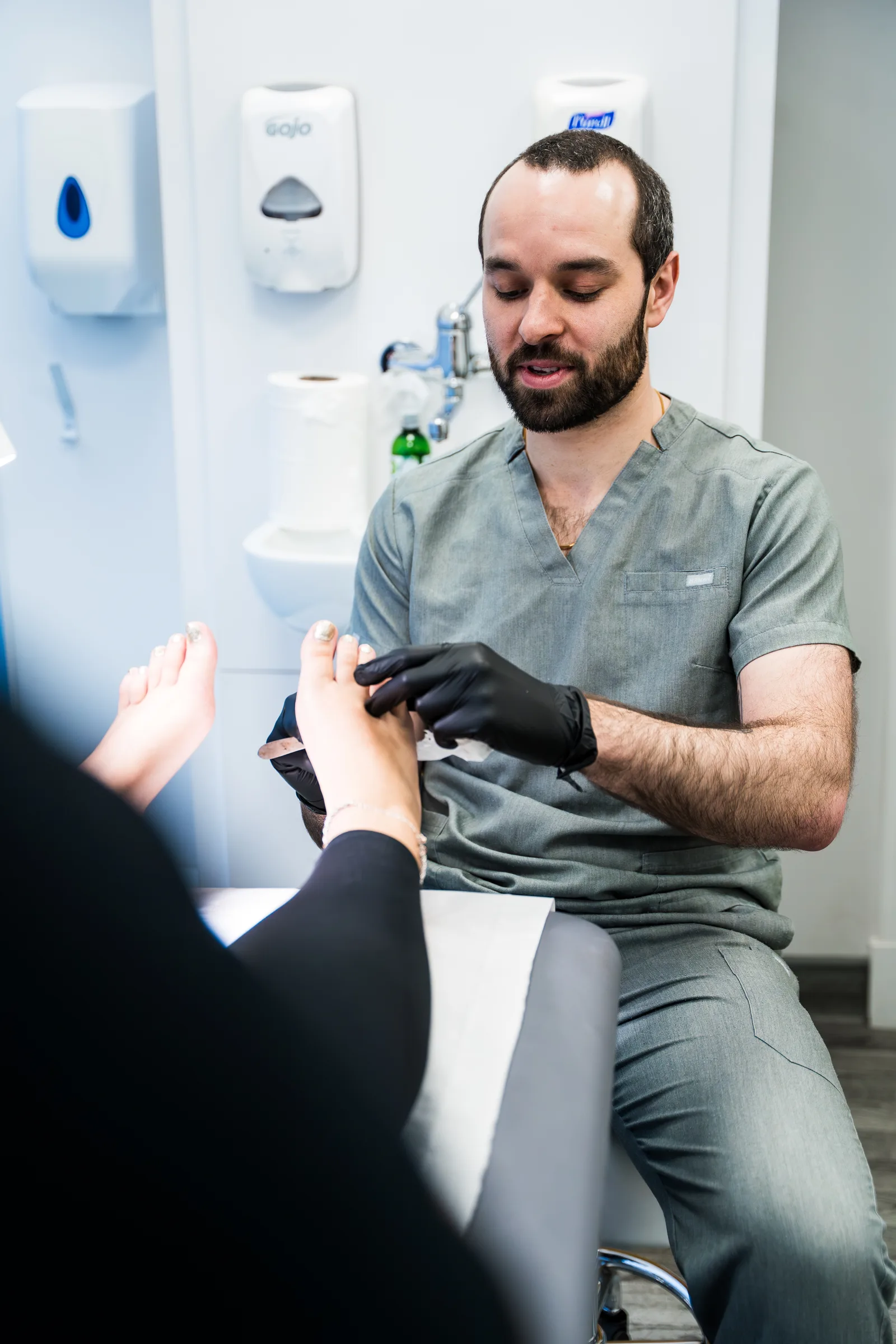
Heel pain in the morning?
Heel pain that keeps coming back needs more than a generic stretch. The Hub can assess the cause and guide you to the right next step.
Morning heel pain is often a clue, but it is not a diagnosis. We look at load, tissue, footwear, gait and the pattern of symptoms.

What it can feel like
Heel pain may be worse first thing in the morning, after rest, after long standing, during running, after running or when walking barefoot on hard floors.
Common causes
- Plantar heel pain
- Plantar fascia irritation
- Heel fat pad sensitivity
- Achilles insertion irritation
- Training, footwear or standing load changes
How we assess it
Assessment checks pain location, first-step symptoms, calf and foot capacity, footwear, activity load and whether diagnostic ultrasound, shockwave, orthotic advice or rehabilitation is appropriate.
Treatment options
- Heel pain assessment
- Load and footwear advice
- Calf and foot strengthening
- Shockwave discussion where appropriate
- Diagnostic ultrasound guidance if needed
Questions people often ask
Is heel pain always plantar fasciitis?
No. Heel pain can involve the plantar fascia, fat pad, Achilles insertion, nerve irritation or bone stress. The pattern matters.
Can diagnostic ultrasound help heel pain?
It can be useful when symptoms are persistent, unclear or not improving as expected, especially when we need to understand tissue change.
Should I stop walking or running?
Sometimes load needs modified, but full rest rarely solves the reason the heel became painful.