
Verruca treatment in Glasgow
A painful or persistent verruca can make walking uncomfortable. Book an initial podiatry assessment in Dennistoun to discuss suitable options.
Book at our Dennistoun clinic
568 Alexandra Parade, Dennistoun, Glasgow G31 3BP. Our Dennistoun clinic has step-free access. Call reception if you need help planning your visit.
Read about verruca treatment options
Book a verruca assessment in Dennistoun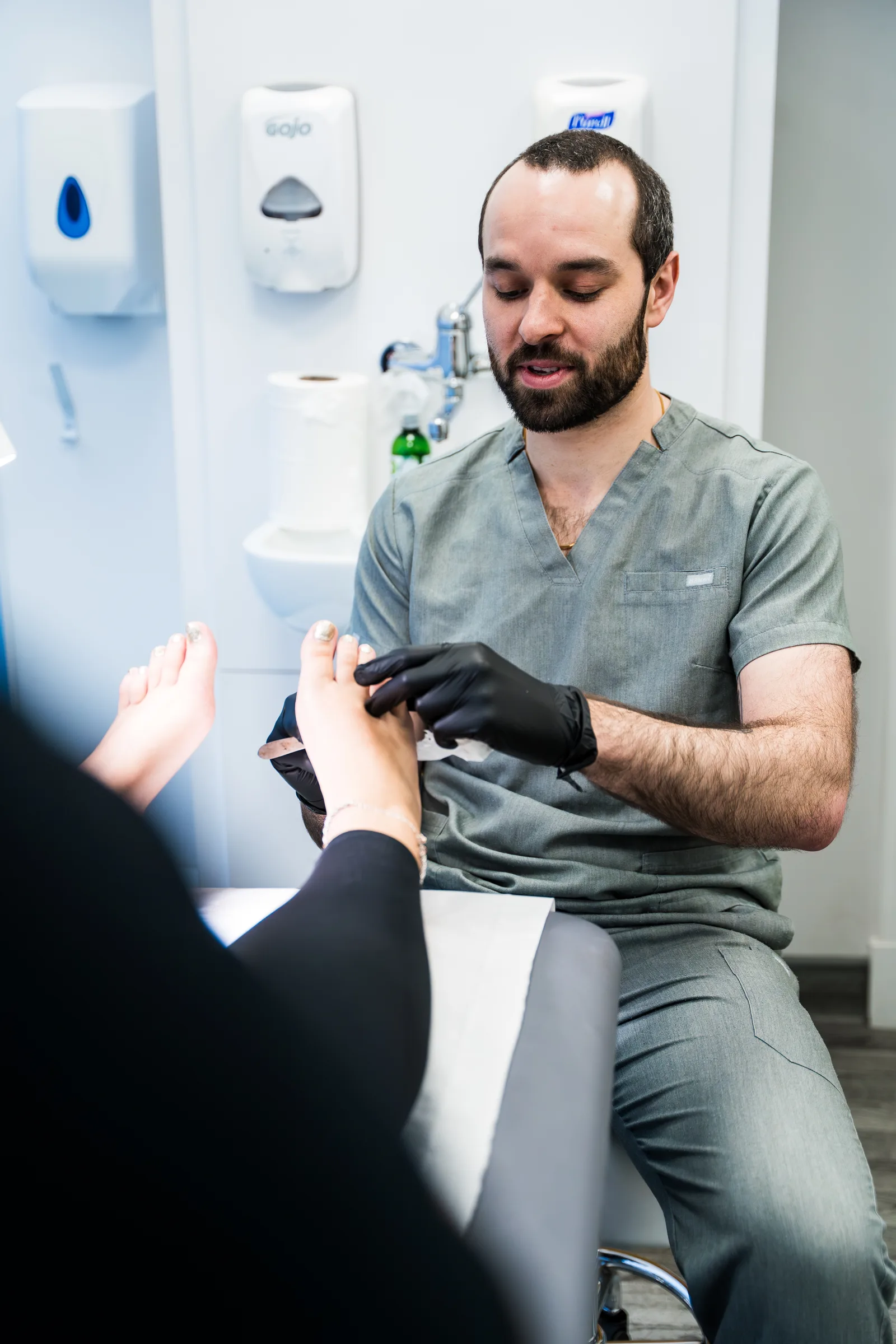
Which appointment should I book?
Choose Podiatry Initial Consultation & treatment (New Patients) for your first verruca assessment. The clinician checks the area and explains suitable options. You are not committing to Swift or another treatment course when you book.
- 568 Alexandra Parade, Dennistoun, Glasgow G31 3BP
- This link already selects Dennistoun and the appointment type. Choose a practitioner and time where offered.
- For help choosing, call reception on 0141 363 0306.
You deserve a clear answer, not more guessing.
At The Hub Glasgow, podiatry, physiotherapy, diagnostics and rehabilitation sit together. That means we can look at the problem properly and guide you to the right next step.
From everyday foot care to more complex pain.
The Hub Glasgow brings podiatry, MSK assessment, in-house diagnostic ultrasound, gait thinking and rehabilitation together. That is useful when symptoms are painful, recurring, unclear or stopping you from walking, running, training or working comfortably.
Download the routine podiatry guide.
A patient guide to routine podiatry at The Hub Glasgow, including nail care, hard skin, corns, callus and when a wider assessment may be useful.
What it can feel like
A verruca may feel like a sharp stone under the foot, become painful in shoes, develop overlying hard skin, spread to other areas or keep coming back.
Common causes
- Verruca tissue under pressure
- Callus over the lesion
- High-load areas of the foot
- Previous incomplete resolution
- Skin irritation from repeated home treatments
How we assess it
Assessment checks whether the lesion is consistent with a verruca, how much pressure is sitting over it, what treatment has already been tried and whether Swift microwave therapy or another podiatry route is suitable.
Treatment options
- Verruca assessment
- Callus reduction where appropriate
- Swift microwave therapy discussion
- Pressure offloading advice
- Review planning
Questions people often ask
When should I get a verruca treated?
Get help if it is painful, spreading, recurring, affecting walking or not responding to sensible home treatment.
What is Swift verruca treatment?
Swift is a microwave-based verruca treatment used by podiatrists for selected cases. Suitability depends on the lesion and your health history.
Can verrucae be mistaken for corns?
Yes. Painful pressure lesions can look similar, so assessment matters before choosing treatment.
Where would my appointment take place?
568 Alexandra Parade, Dennistoun, Glasgow G31 3BP. Our Dennistoun clinic has step-free access. Call reception if you need help planning your visit. This link already selects Dennistoun and the appointment type. Choose a practitioner and time where offered.
Which appointment does this guide link to?
Choose Podiatry Initial Consultation & treatment (New Patients) for your first verruca assessment. The clinician checks the area and explains suitable options. You are not committing to Swift or another treatment course when you book.