
Fungal Nail Treatment East Kilbride Glasgow
Fungal nail assessment for people around East Kilbride and the south-east of Glasgow can be frustrating when it affects walking, running, work shoes or confidence. At The Hub Glasgow, the aim is to find what is actually driving the problem, explain it clearly, and give you a practical next step rather than a vague “wait and see”.
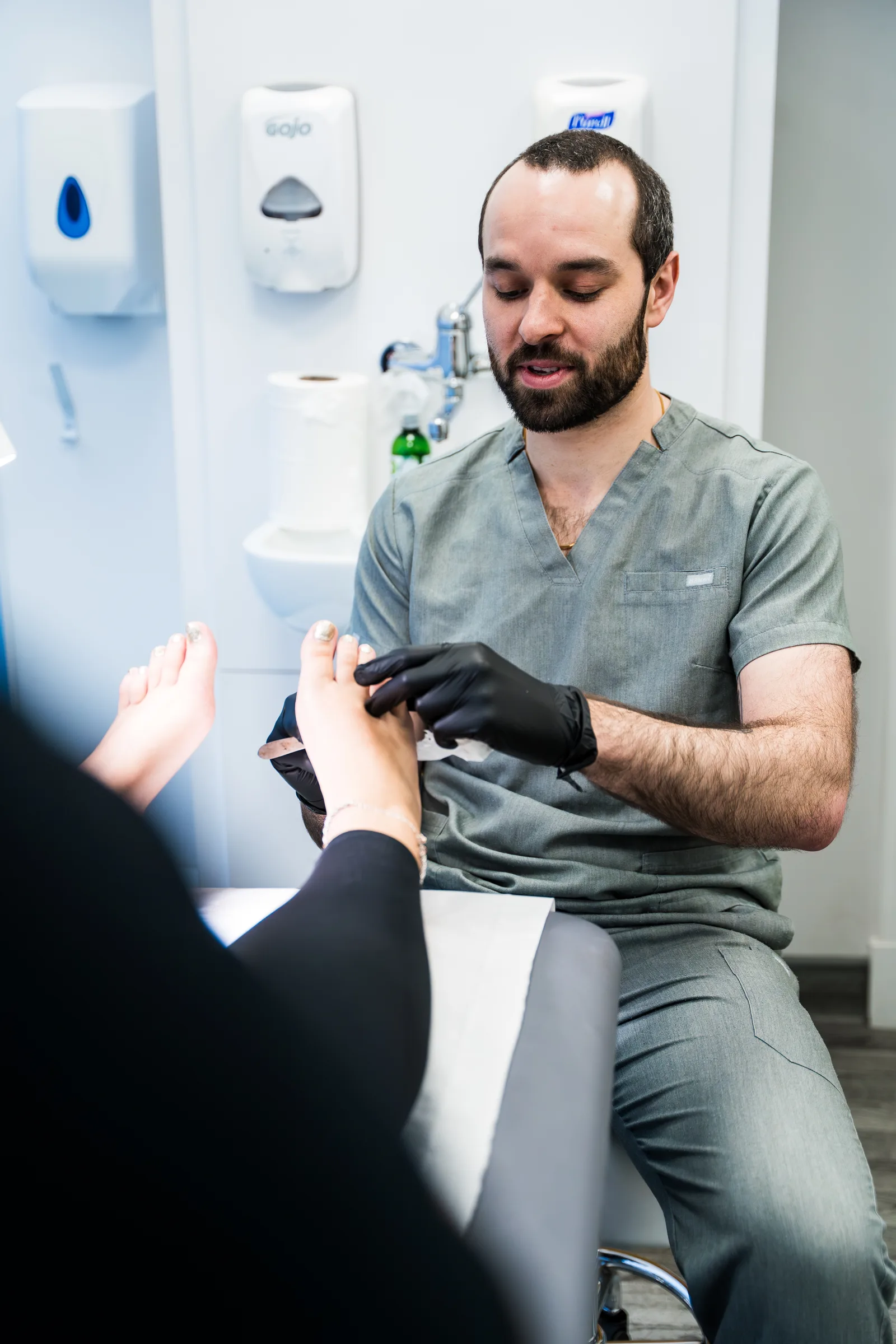
Quick answer on fungal nails
A thick, yellow, crumbly or discoloured toenail can be fungal, but trauma and shoe pressure can look similar. The useful first step is assessment, nail reduction where appropriate, and a realistic treatment plan.
- Do not rely on appearance alone if the diagnosis is uncertain.
- Thick nails often need reduced before treatment can work properly.
- Toenails grow slowly, so improvement is normally measured over months.
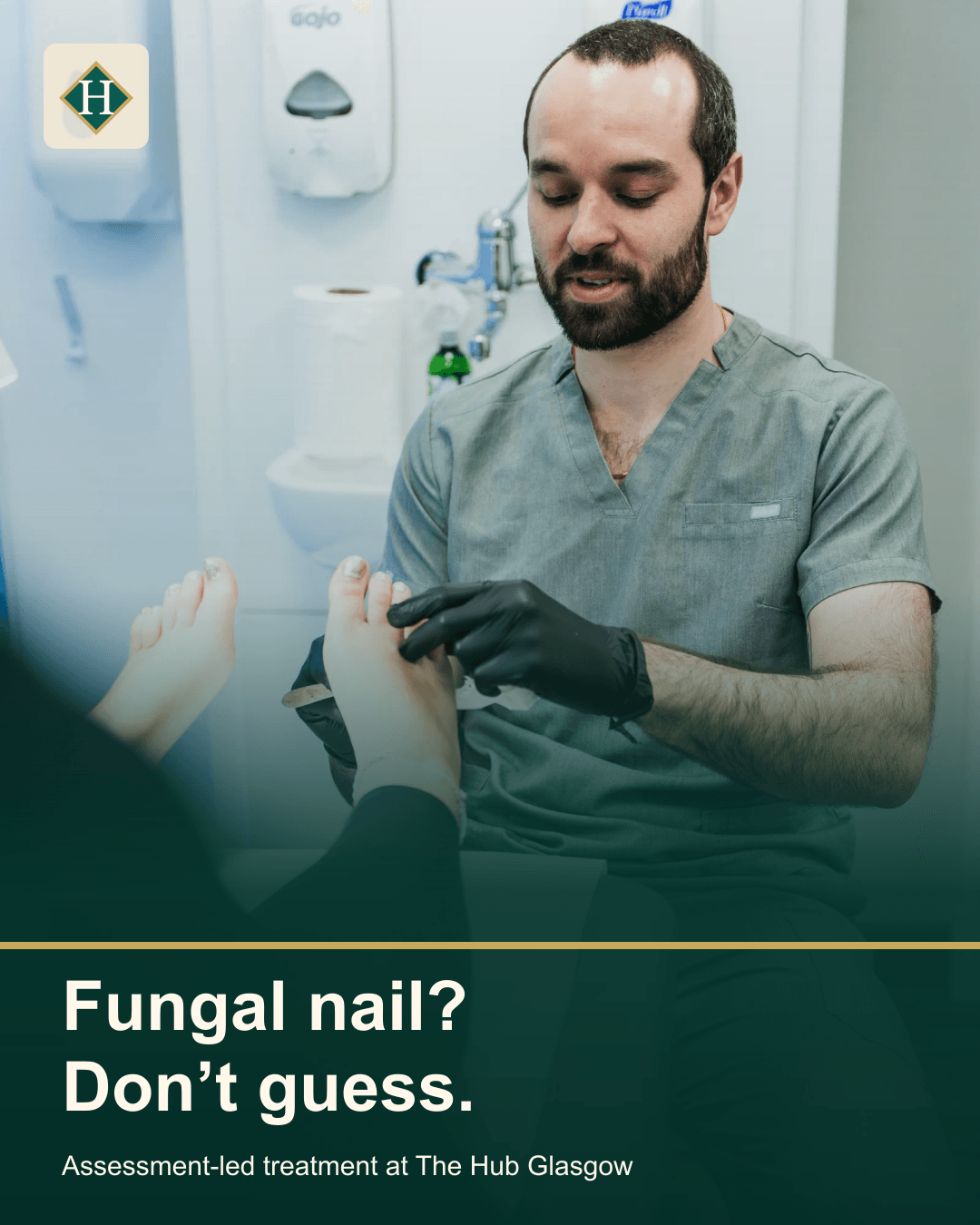
Fungal nail? Don't guess.
The useful first step is to check the nail properly, reduce uncomfortable thickness where appropriate and decide whether this looks fungal, traumatic, pressure-related or mixed.
Thick or discoloured toenails are not automatically fungal. Trauma, pressure and skin conditions can look similar, so assessment matters before months of treatment.
You deserve a clear answer, not more guessing.
At The Hub Glasgow, podiatry, physiotherapy, diagnostics and rehabilitation sit together. That means we can look at the problem properly and guide you to the right next step.
Real people, real assessment and a plan that makes sense before you leave.
The Hub has been helping people move better since 1999. Our clinic pages are here to help you understand the likely routes, not self-diagnose. If something is painful, recurring, unclear or stopping you moving well, we want you assessed properly and pointed to the right care.

This is not basic foot care. It is specialist-level clinical reasoning.
The Hub Glasgow brings podiatry, MSK assessment, in-house diagnostic ultrasound, gait thinking and rehabilitation together. That is useful when symptoms are painful, recurring, unclear or stopping you from walking, running, training or working comfortably.
Fungal nail treatment is slow, specific and easy to get wrong.
Current patient guidance is consistent on one practical point: a changed toenail should not be treated on appearance alone if the diagnosis is uncertain. Trauma, shoe pressure, psoriasis and ageing nail changes can mimic fungal infection.
Based on patient-facing guidance from NHS, DermNet and the British Association of Dermatologists.
Download the fungal nail treatment guide.
A practical PDF guide from The Hub Glasgow covering what fungal nails can look like, why diagnosis matters, treatment routes, realistic timelines and what to do if the nail is thick, crumbly or changing colour.
What it can feel like
Fungal nail changes may include thickening, yellow, white or brown colour change, crumbly nail, lifting, odour, athlete's foot or pressure in shoes. If the problem is painful, recurring or changing how you walk, book a clinic assessment rather than guessing at the cause.
Common causes
- Fungal nail infection
- Athlete's foot spreading to the nail
- Nail trauma
- Moist or tight footwear
- Repeated pressure or non-fungal nail thickening
How we assess it
For East Kilbride Glasgow patients, assessment may include the painful area, skin and nails, joint movement, strength, walking pattern, footwear, pressure points and whether diagnostic ultrasound, gait analysis or onward referral would be useful.
Treatment options
- Nail assessment
- Reduction of thick nail where appropriate
- Skin and athlete's foot advice
- Topical treatment guidance where suitable
- GP/prescriber discussion if oral medication may be needed
- Ongoing podiatry review
Questions people often ask
Is this suitable if I live near East Kilbride?
Yes. This page is written for people around East Kilbride and nearby Glasgow areas who want a clear, practical route into fungal nail assessment with The Hub Glasgow.
Do I need a specialist assessment first?
If the problem is persistent, worsening, recurring or changing how you walk, an assessment helps identify the likely cause before guessing at treatment.
What happens after the assessment?
You should leave with a clearer explanation of the likely cause, what to do next and whether podiatry treatment, footwear advice, rehab, imaging or another route is most appropriate.